



3 Pot Stocks to Avoid Like the Plague in July

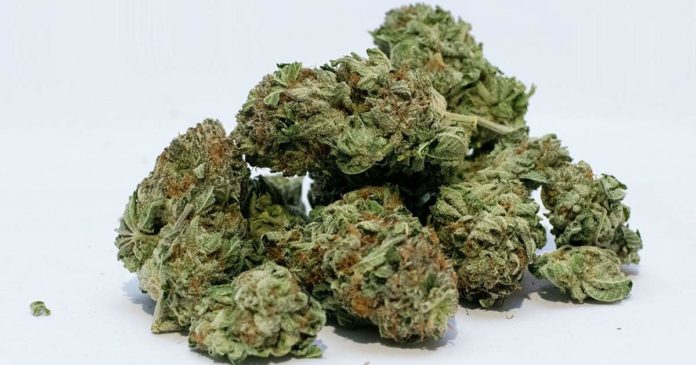
Want to make some serious green this decade? Investing in cannabis might be for you.
According to a report from New Frontier Data, U.S. weed sales are expected to grow by an average annual rate of 21% through 2025, ultimately hitting north of $41 billion. Meanwhile, cannabis-focused analytics company BDSA is looking for Canadian pot sales to catapult from $2.6 billion in 2020 to $6.4 billion by 2026.
However, history is very clear that not all companies in high-growth industries will be successful. Even with a promising outlook for legal cannabis in North America, the following three pot stocks should be avoided like the plague in July.

Sundial Growers
No surprise here. If there's a marijuana stock at the top of the avoid list, it's the company whose management team continues to show absolutely no regard for its shareholders, Sundial Growers (NASDAQ:SNDL).
Last year was transformational in a variety of ways for Sundial. Its management shifted the company's focus away from lower-margin wholesale cannabis to higher-margin retail, and in the fourth quarter, executives began raising capital to strengthen the company's debt-laden balance sheet. While both strategies sounded great on paper, neither has worked out well for shareholders.
Shifting the company's focus to retail has been rocky at best. Essentially starting from scratch on the retail side led to a 30% reduction in net cannabis revenue in the March-ended quarter. To boot, Wall Street anticipates companywide sales will decline by 11% in 2021 to $45 million, all while weed sales for Canada continue to climb.
The bigger issue has been management's reckless behavior on the capital-raising front. Even after paying off all outstanding debt, executives have continued selling stock. Between Sept. 30, 2020, and May 7, 2021, the company's outstanding share count skyrocketed from 509 million to 1.86 billion. With this many shares outstanding, it's going to be virtually impossible for Sundial to ever report meaningful earnings per share. It might also force the company to enact a reverse stock split to maintain a share price above $1, which is required for continued listing on the Nasdaq exchange.
The icing on the cake is that while Sundial has built up a cash hoard of as much as $876 million, as of early May, management has no clear plan as to how it'll put this capital to work. Investors in Sundial don't have to worry about bankruptcy, but the onslaught of dilution, coupled with an abysmal operating performance, will continue to weigh down the company's share price.

Aurora Cannabis
If you think Sundial is a regular guest to this monthly column of pot stocks to avoid, let me introduce you to its longest-running "tenant," Canadian weed company Aurora Cannabis (NASDAQ:ACB).
At one time, there wasn't a hotter marijuana stock on the planet than Aurora Cannabis. It was once the most-owned stock on Robinhood, the online investing app dominated by retail investors. And its 15 cultivation facilities were projected to make it the largest cannabis producer in the world. It was a fun memory while it lasted.
Like Sundial, Aurora has been a train wreck from an operating standpoint. Even after shuttering five of its smaller cultivation facilities, halting the construction of two large production sites, and selling a greenhouse that it never got around to retrofitting for pot production, Aurora is no closer to generating a recurring profit or producing positive adjusted earnings before interest, taxes, depreciation, and amortization (EBITDA). In its fiscal third quarter, ended March 31, recreational weed sales nosedived 53% and adjusted gross margin fell 7 percentage points to 21%.
What's made Aurora Cannabis an even worse performer than Sundial is the company's history of acquisitions. Since 2016, Aurora has made around a dozen purchases, each of which proved to be grossly overvalued. The worst of them all was the MedReleaf deal, which cost about $2 billion. MedReleaf was expected to generate 140,000 kilos in annual cannabis output and allow Aurora to profit from its proprietary brands. Ultimately, Aurora is generating 28,000 kilos annually (after shuttering/selling assets) and isn't benefiting much from MedReleaf's brands.
And as you might have guessed, it's also a serial share diluter. Between June 2014 and March 2021, Aurora Cannabis' outstanding share count has ballooned from about 1.3 million shares to 198 million. As long as this company continues to lose money, management will keep selling stock to raise capital. That puts it squarely in the avoid column.

Canopy Growth
To complete the trifecta, the third pot stock to avoid like the plague in July also hails from Canada. Canopy Growth (NASDAQ:CGC) might be the largest Canadian weed stock by market cap, but it's an absolute mess from an operating standpoint.
The selling point for the company has long been its robust cash position. Spirits giant Constellation Brands owns close to a 39% stake in Canopy Growth, with those equity stakes pumping well over $4 billion into the company. This cash was expected to allow Canopy to expand its existing infrastructure and act as a downside buffer.
However, its poor operating performance and overpriced acquisitions have eroded what was once a massive net cash position. After taking on $750 million in debt in March 2021, the company has approximately $1.87 billion in cash, cash equivalents, and short-term investments. But that compares to $1.28 billion in long-term debt. A more than $3 billion net-cash position has now been shrunk to less than $600 million in under three years. That should give you some idea of how poorly managed this company has been.
In fiscal 2021, which ended March 31, Canopy brought in almost $493 million in sales and produced a gross margin of $54 million. But selling, general and administrative (SG&A) expenses plus share-based compensation tallied a combined $541 million. Including a number of one-time expenses, Canopy Growth's operating loss was $1 billion. No matter how much cost-cutting occurs at the SG&A level, this company isn't anywhere close to generating a profit.
Comparatively, you could buy a U.S. multistate operator like Curaleaf, which has a similar market cap, is expected to turn profitable on a recurring basis this year, and will generate twice as much in annual revenue as Canopy Growth.
Until Canopy proves it can live up to its bloated market cap, it's not worth owning.


 Follow us on Instagram
 Connect with us on Linkedin